
Author: villagra_admin

  • Can a Foreigner Buy a Property in Chile Without Having Residency?

    Can a Foreigner Buy a Property in Chile Without Having Residency?

    It’s one of the first questions we get from clients arriving from outside Chile who are interested in Pucón, Villarrica, or some corner of the Araucanía region: do I need residency to buy? The short answer is no. You don’t need residency or any type of visa to buy a property in Chile — the only thing you need is a RUT, a procedure that, with good guidance, is resolved quickly and without setting foot in Chile. The detail lies in doing that procedure correctly, and that’s where it helps to have good support.

    The General Rule: The Same Conditions as a Chilean

    Chile is, within the region, one of the countries most open to foreign real estate investment. The law doesn’t require residency, nationality, or any special permit for a foreign person to buy a house, an apartment, or a piece of land. In practice, a foreign buyer signs the same public deed, before the same notary, and is registered at the Real Estate Registrar (Conservador de Bienes Raíces) exactly the same as a Chilean buyer.

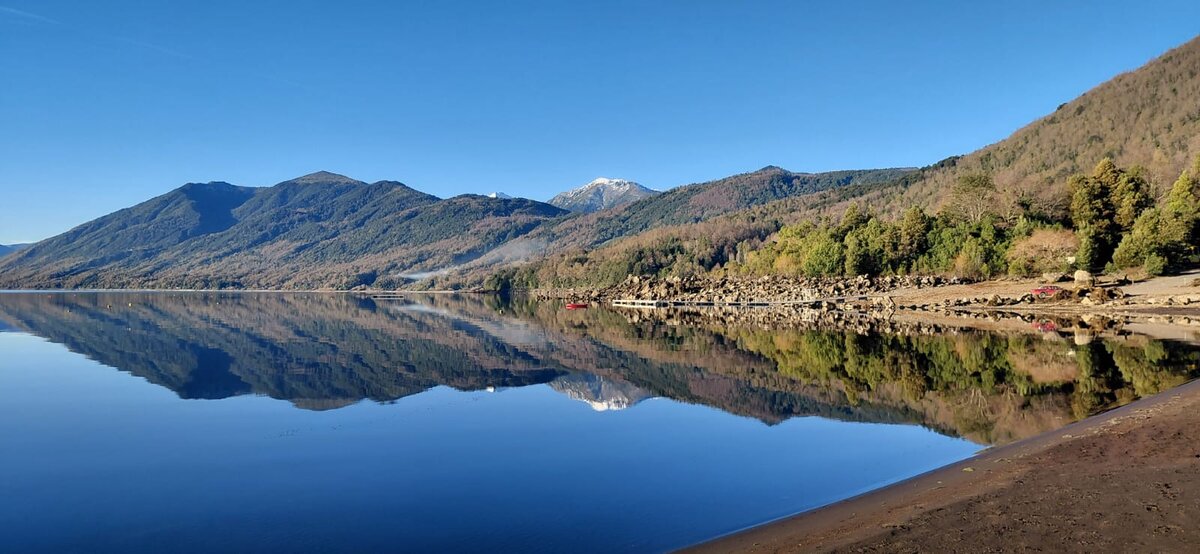
    This makes the Araucanía region — with its combination of lakes, volcanoes, and native forest — an increasingly sought-after destination for buyers from other countries looking for a second home, a tourist rental project, or simply a different place to live part of the year.

    The Only Thing You Really Need: a Chilean RUT

    Although residency isn’t required, there is one unavoidable administrative requirement: the RUT (Rol Único Tributario, or Tax ID Number). Without a RUT you can’t sign a purchase deed in Chile, because it’s the number that identifies the buyer to the Internal Revenue Service (Servicio de Impuestos Internos) and to the Real Estate Registrar. It’s a tax identification number, not a residency permit — it doesn’t allow you to live in Chile or have anything to do with immigration procedures; it’s only used for transactions like this one.

    The good news is that getting the RUT doesn’t require traveling to Chile. It can be arranged directly with the Internal Revenue Service (SII) while abroad, or through a lawyer with power of attorney who handles the entire process on your behalf. With good guidance, it’s a fast process — usually resolved in days, not months — and it’s exactly the first thing we arrange with our international clients before moving forward with any offer, so that when the property they’re interested in comes up, they don’t lose time over a pending administrative procedure.

    The Only Real Restriction: Border Zones (and It Doesn’t Apply to Most Buyers)

    There is a legal exception worth mentioning, although in practice it affects few cases: Decree Law 1939, which restricts the purchase of real estate within officially declared border zones to individuals or companies from neighboring countries — that is, citizens of Argentina, Bolivia, or Peru, not foreigners in general. A European, North American, or Asian buyer isn’t affected by this rule.

    For a business like ours, which works in communes near border crossings such as Mamuil Malal, this is something we do review case by case before moving forward with a specific property, because the law allows exceptions through presidential authorization. If your profile or the property you’re interested in falls under this situation, it’s exactly the kind of check our legal team carries out before you sign anything.

    Another Point Worth Checking in the Araucanía Region: Indigenous Lands

    A lesser-known but relevant issue in this part of the country: some rural land in the Araucanía region is registered as indigenous land under Law 19,253, and its sale to people without recognized indigenous heritage may require prior authorization from CONADI, or may not be possible at all. This isn’t something that shows up just by looking at the property title — it has to be checked directly. It’s another filter we apply before offering a piece of land or a farm to a foreign buyer, precisely to avoid surprises later on.

    How Propiedades Villagra Supports You Through the Whole Process

    We’ve spent years working with foreign buyers interested in Pucón and its surroundings, and we know that the legal side is usually what raises the most questions from a distance. That’s why we work with a team of lawyers who take care of reviewing each of these points — RUT, border restrictions, title status, indigenous land status when applicable — before you move forward with an offer. Ingrid, who leads the agency, has personally guided several purchase processes for clients who had never set foot in Chile before signing.

    If you’re considering buying a property in Pucón, Villarrica, or any commune in the Araucanía region from abroad, let’s talk: we’ll review your specific case, explain the exact steps you need to take, and support you from start to finish, without you having to figure it out on your own.

    Write to us on WhatsApp → or check out our property catalog

    *This article provides general information and doesn’t replace specific legal advice. Each situation — the buyer’s nationality, the property’s exact location, the status of the title — can change the steps to follow, which is why at Propiedades Villagra we review every case with our legal team before moving forward.*

  • Can You Buy a Property in Chile From Abroad, Without Traveling?

    Can You Buy a Property in Chile From Abroad, Without Traveling?

    This is the question that usually comes right after the last one: you already know you don’t need residency to buy in Chile, just a RUT — but what if you can’t travel? The answer is yes. It’s entirely possible to buy a property in Pucón, Villarrica, or any commune in the Araucanía region without ever setting foot in Chile during the whole process, as long as the paperwork is organized properly from the start. The tool that makes this possible is called a power of attorney, and although it sounds complex, in practice it’s a well-known path used frequently by foreign buyers.

    How It Works: Buying With a Power of Attorney

    A power of attorney (also called a special power or mandate) is a legal document in which you authorize another person — usually a trusted lawyer in Chile — to act on your behalf for specific procedures: signing the promise of sale, signing the final deed before a notary, and registering the property in your name at the Real Estate Registrar (Conservador de Bienes Raíces). That person signs for you, with the same legal validity as if you had done it yourself in front of the notary.

    One important detail to be clear on from the start: the power of attorney must explicitly grant you the authority to “buy” and “dispose of” the property — a general, vague power of attorney isn’t enough. This is one of the most common mistakes we see: a power of attorney that’s too generic, which the Chilean notary ends up rejecting because it doesn’t clearly specify what’s being authorized. That’s why, at Propiedades Villagra, we work with our team of lawyers to draft the power of attorney document before you sign it, avoiding this kind of setback.

    How to Grant the Power of Attorney if You Live Outside Chile

    There are two valid paths, and which one suits you depends on where you are:

    – Before a local notary in your country of residence. This is the fastest option in most cases, as long as the document is later properly legalized so it’s valid in Chile (see the next point).

    – Before the nearest Chilean consulate. The consul acts with authority equivalent to a notary and can add the power of attorney directly to their records, which in some cases simplifies later steps. It usually requires booking an appointment in advance.

    If your country is part of the Hague Apostille Convention (Chile has been a member since 2016), a power of attorney signed before a local notary only needs an apostille from the competent authority in your country — a stamp that certifies the document’s authenticity and replaces traditional consular legalization. If your country isn’t part of the convention, the process is longer: local legalization, then the Chilean consulate in your country, and finally the Ministry of Foreign Affairs in Santiago.

    If the Power of Attorney Is in Another Language: Official Translation

    If the document isn’t in Spanish, it needs an official translation before it can be used in Chile. One point that surprises many clients: Chile doesn’t have the figure of a “sworn translator” as in Spain or other countries in the region — the officially recognized translation for procedures before Chilean public agencies is done specifically by the Translation Department of the Ministry of Foreign Affairs (available for English, French, German, Portuguese, and Italian into Spanish). It’s best to apostille or legalize the document first, and translate it afterward.

    The Final Step Before Signing: Notarial Registration in Chile

    Once the power of attorney has been apostilled or legalized (and translated, if applicable), it must be “notarially registered” (protocolizado) before a notary in Chile: that is, formally incorporated into the notary’s records so it becomes a usable instrument for Chilean procedures. This step has deadlines that should be checked precisely before committing to any signing date — they vary depending on how much time has passed since the power of attorney was issued — so it’s exactly the kind of detail we coordinate case by case with our legal team, so no deadline gets missed.

    The RUT Can Also Be Arranged Without Traveling

    As we saw in the previous article, the RUT is the only real administrative requirement for buying in Chile, and it can also be handled entirely remotely: your representative in Chile, with the corresponding power of attorney, arranges it directly with the Internal Revenue Service (Servicio de Impuestos Internos). It’s one of the first procedures we set up with our international clients, alongside preparing the power of attorney, so both are ready by the time the property you’re interested in appears.

    Sending Funds From Abroad: What to Expect

    When it’s time to transfer the purchase funds, Chilean banks — under anti-money-laundering regulations — usually request documentation proving the source of the funds (an employment contract, a deed from a previous sale, financial statements, or other supporting documents depending on your situation) before processing significant international transfers. It’s not an obstacle, but it’s worth planning ahead: talk to your bank and to our team early, so the transfer is ready when it’s needed for signing, and doesn’t become the bottleneck of the whole process.

    How Propiedades Villagra Supports You Through the Whole Process

    Coordinating a power of attorney, an apostille, an official translation, and an international transfer sounds — and sometimes is — more complex than buying a property while in Chile. The difference comes from having a team that has already done this before: our team of lawyers drafts the power of attorney tailored to you, checks that the apostille or legalization is correct before you move forward, coordinates the notarial registration in Chile, and makes sure the deed and registration are done right the first time. Ingrid has personally supported clients who bought their property in Pucón without ever traveling to Chile during the whole process.

    If you’re considering buying remotely in Pucón, Villarrica, or any commune in the Araucanía region, let’s talk: we’ll tell you exactly which documents you need, in what order, and we’ll support you from start to finish so distance isn’t a problem.

    Write to us on WhatsApp → or check out our property catalog